

In Beijing in 2008, whenever the Canadian men’s eight went out to train, coaches from the other crews were there with stopwatches. Jake Wetzel suggested they move down to the far end of the lake so nobody could steal their secrets.
Kyle Hamilton, the stroke and captain, wasn’t having it. As Ed Willes tells it, Kyle’s answer was a flat no, with an F-word in the middle. “We’re going to do our stuff,” he said. “They can time us all they want. It won’t make any difference.”
Later the crew’s race plan ended up somewhere very public, where in theory anyone could read it. Someone asked whether they should change it. The answer was no: “They know what we’re gonna do. We know what they’re going to do. That’s all that matters.”
Ed interviewed around 60 people for his book The Eight, which is illustrated with photographs by Kevin Light, who rowed in that Beijing crew. He joined me on Episode 51 from North Vancouver. To understand that Beijing confidence, he says, you have to go back four years.

Photo: Mercantile Radio
On The Eight‘s site, the book is described as a collectors-grade tribute to Olympic rowing, with more than 100 photographs by Light. At its core is legendary head coach Mike Spracklen, his run of gold, silver and bronze medals across four Olympic Games, and the end of his tenure after the eight-man crew’s silver medal at the 2012 London Games. Light, a 2008 Olympic gold medallist, three-time world champion and winner of eight World Cup gold medals, rowed for Spracklen from 2001 until his retirement in 2012. The 46-year-old from Victoria has been a professional photographer since he left rowing. Ed himself spent four decades in sports journalism, from the Medicine Hat News to the New York Times, including 20 years as the feature columnist at The Province in Vancouver. He was the dedicated rowing writer at the 2004, 2008, 2012 and 2016 Games, has written four other sports books, and is a member of the CFL Hall of Fame. He retired in 2020. The book is available as a pre-sale at theeightbook.com.
Fifth in Athens
Canada went into the Athens Olympics in 2004 as two-time world champions in the eight. They finished fifth. Ed doesn’t sugar-coat it, and neither did the athletes he interviewed.
Kyle Hamilton was in that Athens boat. Ed described him as “kind of an ordinary middle of the pack guy” at the time. Kyle came out of Athens and, in Ed’s words, said, “I’m not going out like that.” Over the next four years he transformed himself into an athlete Mike Spracklen called the best sweep rower in the world, simply by dedicating himself to the program and following it.
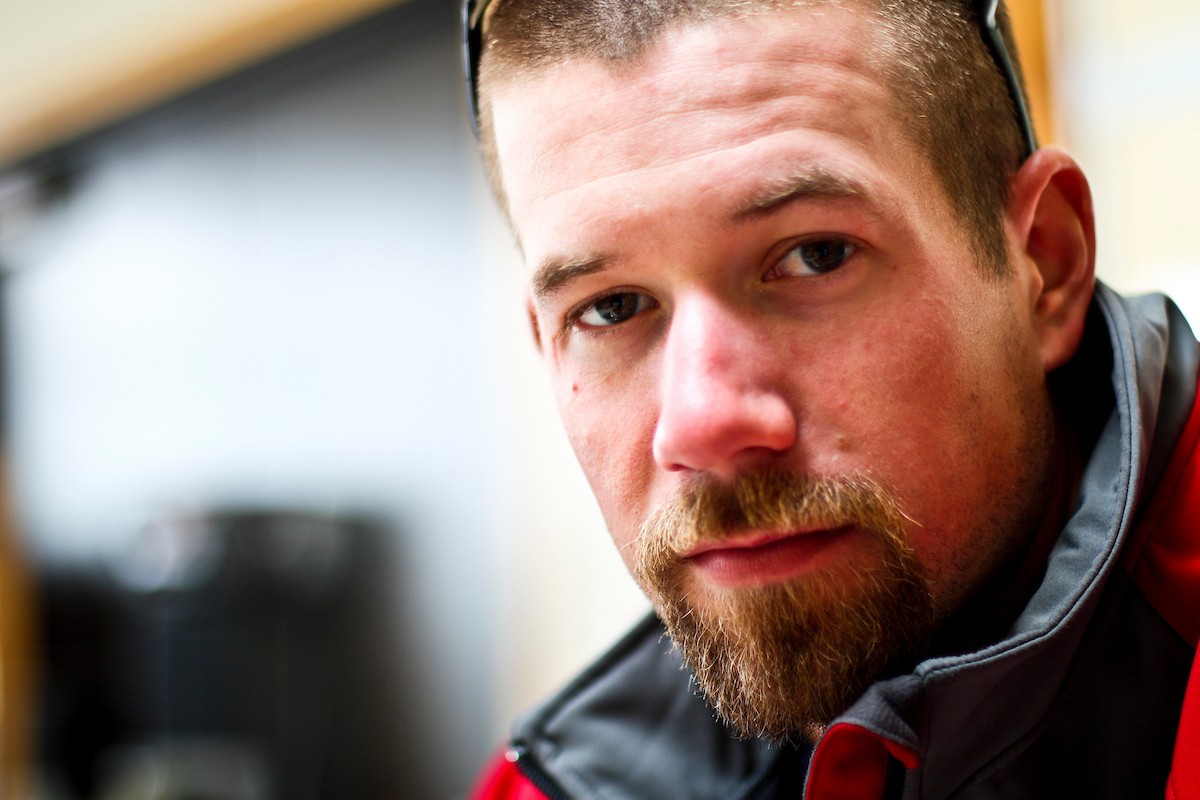
Photo: Kevin Light
An excerpt from The Eight, published in the Reading Room on theeightbook.com, fills in how steep that climb was. Willes writes that Hamilton slumped badly in the run-up to Athens and barely made the Olympic crew: “He was boring Kyle in the middle of the boat, a big guy who didn’t pull like a big guy.” Then it all changed. Hamilton says it started with a full commitment to Spracklen’s program. A lot of days in the winter of 2005, he was the only national team member at Elk Lake. He also set out to master the single. By his own admission he’d been awful at sculling, and in one of the staples of the national team’s lore he’d been beaten by Lysanne Lavigne, a lightweight woman, in Spracklen’s favoured around-the-lake competition.
According to coxswain Brian Price, that simple goal was the key. “He was in a single for two winters,” Price says in the excerpt. “That’s when you learn to move a boat by yourself. You can hide in an eight. In a single it’s all on you. He learned a better entry (to his stroke), a better exit, how to apply power. The next thing you know he’s kicking everyone’s asses.”
Hamilton became captain, and in the same excerpt he says of that role: “That was the turning point in my development as an athlete. I have a very low tolerance for hypocrisy and that put me in a situation where I couldn’t cut any corners. If your captain’s not doing it, why should anyone else? I had to do everything the way it should be done all the time.”
Five of the Athens crew came back for Beijing. Ed’s point, and it’s one I’ve seen again and again in the eight, is that it isn’t really about erg scores or VO2 max. It’s the drive a crew picks up from a catastrophic loss, and its refusal to let that loss define it.
A simple program, done relentlessly
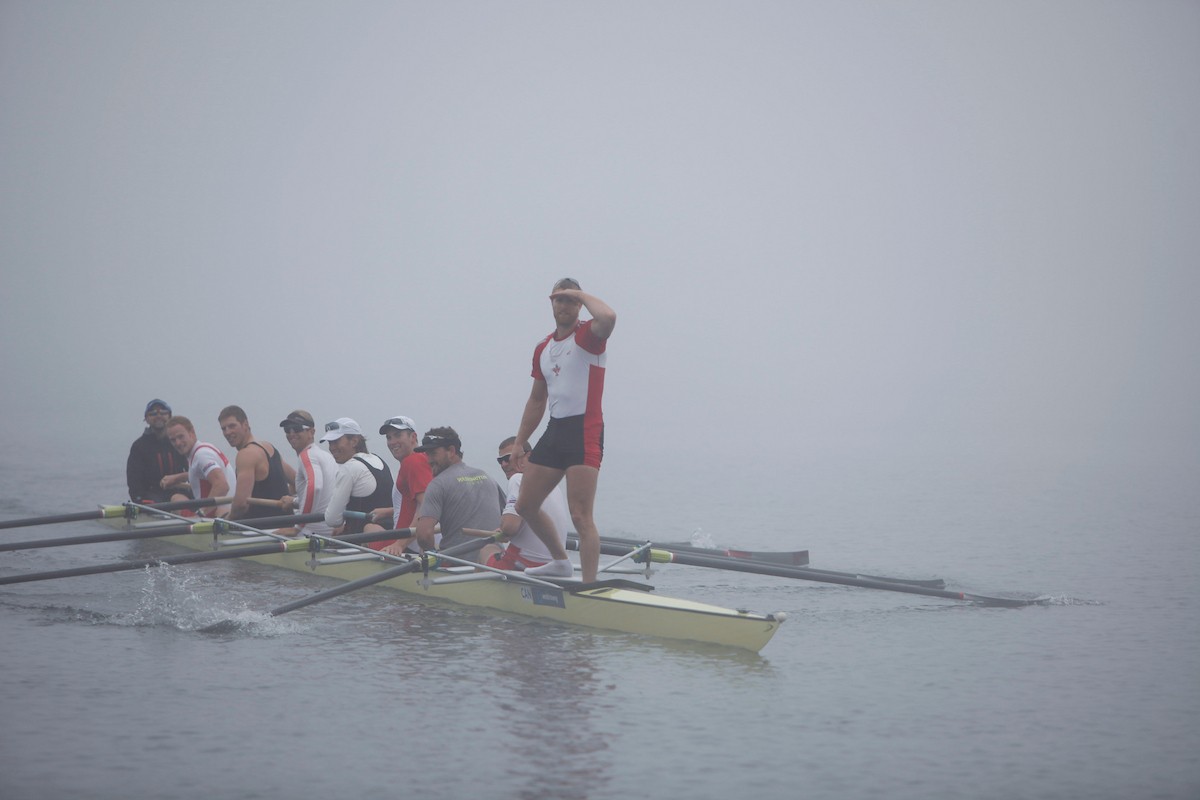
Photo: Kevin Light
The program at Elk Lake on Vancouver Island was brutally simple. Every one of Spracklen’s talks about rowing, one of his athletes told Ed, started with the same three things that move a boat fast: the length of the stroke, the power of the stroke and the rate of striking. Day after day there were pairs racing along the buoy line, with the winner of each piece earning the right to start closest to the line. And there was Spracklen’s constant message: your body is lying to you, it can always do more.
He also had a clear view of where his job stopped. Ed quoted him: “I’m not qualified to make you a better person. I am qualified to make you a better rower.”
In another excerpt on theeightbook.com, Spracklen puts the workload this way: “Of course the program is tough. If it’s not as hard as it can be you’re not going to be the best you can be. The program is always nudging for a little more, a little more.” Most of the winter training was done in small boats, predominantly pairs and singles. The core piece was a timed race along the buoy line. The fastest pair from the previous day started closest to the line, and often 10 or 15 boats would line up, because Spracklen’s camp was always open. The catch, Willes writes, was that the coach, coxswain Brian Price or assistant coach Terry Paul always lined up on the other side of the buoy line, and their focus was on the boats closest to it, the boats that would help Canada win.
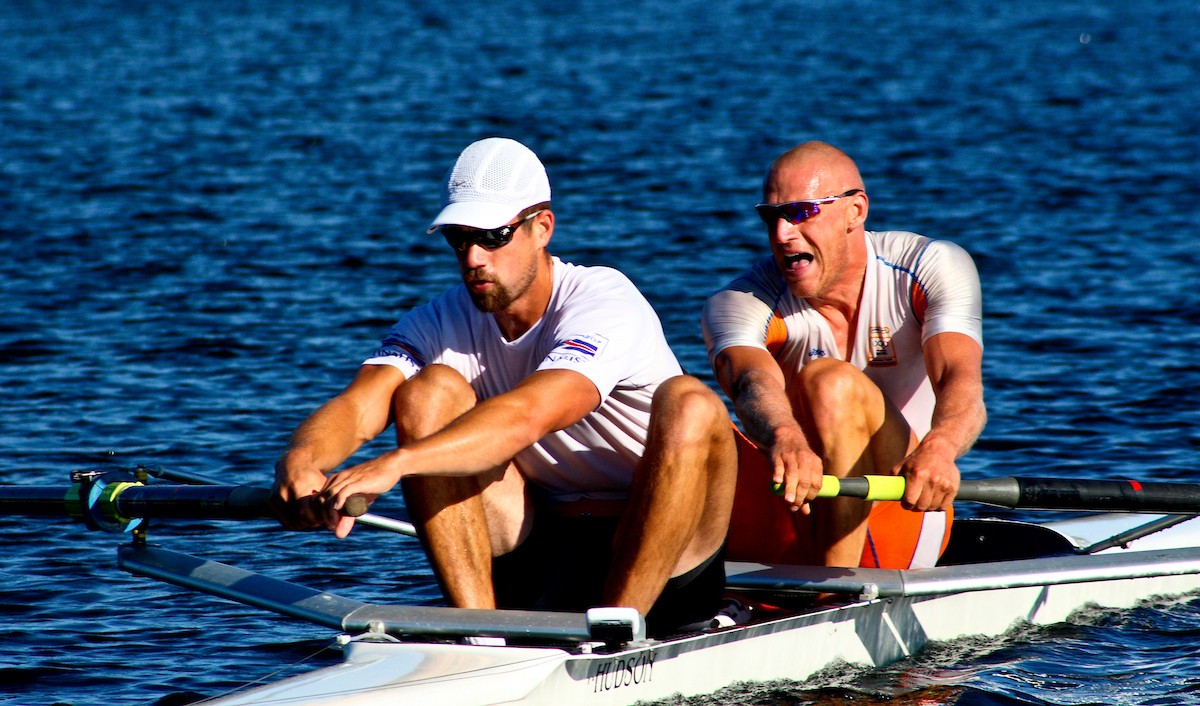
Photo: Kevin Light
“A lot of Mike’s program was who’s the king of the castle,” says Jake Wetzel, in the same excerpt. “It was great because it appealed to every single one of my nastiest instincts. I loved it. Everything becomes so clear. There’s no bullshit. People can do it or they can’t. Everyone goes through rough patches but it’s intense all the time. It was such a compelling environment to be in.”
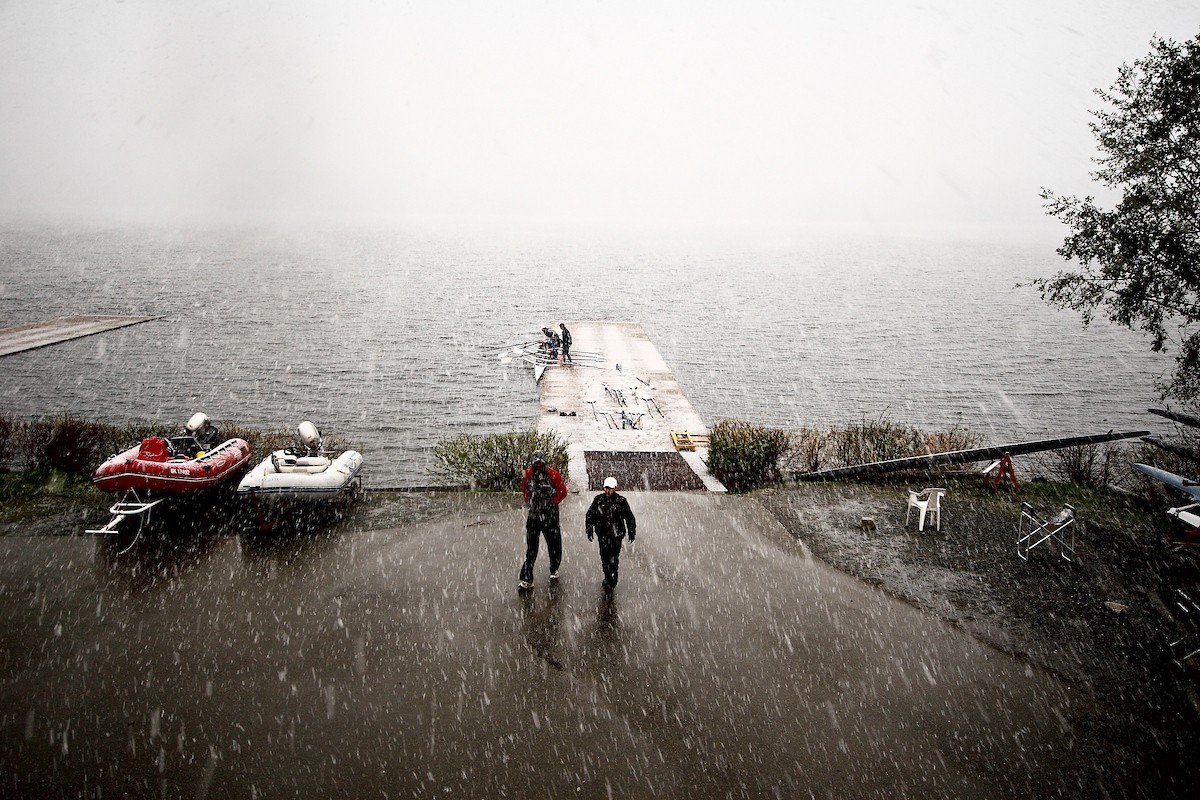
Photo: Kevin Light
So when Beijing came around, Ed calls it “a perfect storm”. The crew was experienced, at the peak of its powers, still stinging from Athens and coached by a man running the program his way. As Ed relays it from Kyle, they didn’t have to do anything magical on the day. “They just had to go out and do their job.”
The gold-medal race
A later excerpt from The Eight on theeightbook.com takes you into the final itself. Adam Kreek and Dominic Seiterle had a pre-race ritual. They had roomed together at the Linz World Cup the year before, watched the film 300 while both were dealing with back injuries, and, before the starters’ horn, would look at each other and say, “For Sparta.” Those were their last words before the horn sounded.
The eight didn’t crush the field. The margin of victory was 1.22 seconds, or half a boat-length over the second-place UK. The time was 5:23.89, over 220 strokes. It was decisive but not overwhelming, Willes writes, and still there wasn’t a moment in the race when any member of the Canadian eight felt the outcome was in question.
“There were no doubts,” says Light, who sat in the bow. “Sitting in the bow seat, you know right away.” Howard, in the same excerpt, says: “We went off that line harder than anyone else. The race was over by the halfway mark.” And Wetzel: “After the first 20 strokes, I believed we were going to win. We brought the rate down, but we kept moving. The way that boat felt was incredible.”
The drama, such as it was, came when the Canadians beat back challenges from the Brits, then the Americans. According to Hamilton, the British crew altered their race plan and charged earlier than expected. Spracklen’s crew thought they might drop a couple of seats before they responded; instead, when the Brits pushed, the Canadians gained ground. Then the US made a similar move to the one that had caught Canada late in an Athens heat. Hamilton glanced up, said “US,” to Price, and the coxswain called for more. “Brian took charge,” says Hamilton. “He was the best.”
Kreek estimates that, in eight years with the national team, he attended 7,200 practice sessions: 13,000 hours of focused training and more than 2.2 million practice strokes, all for those 220 strokes in Beijing. “You climb Mount Everest,” he says in the excerpt. “How was it? Well, it’s about the size of a kitchen table and I was there for 30 seconds then I had to turn around and head back. When you do something that’s in your wildest dreams, the excitement doesn’t last. It’s important to have those goals, but you have to recognize that’s the reality.”
What I took from it
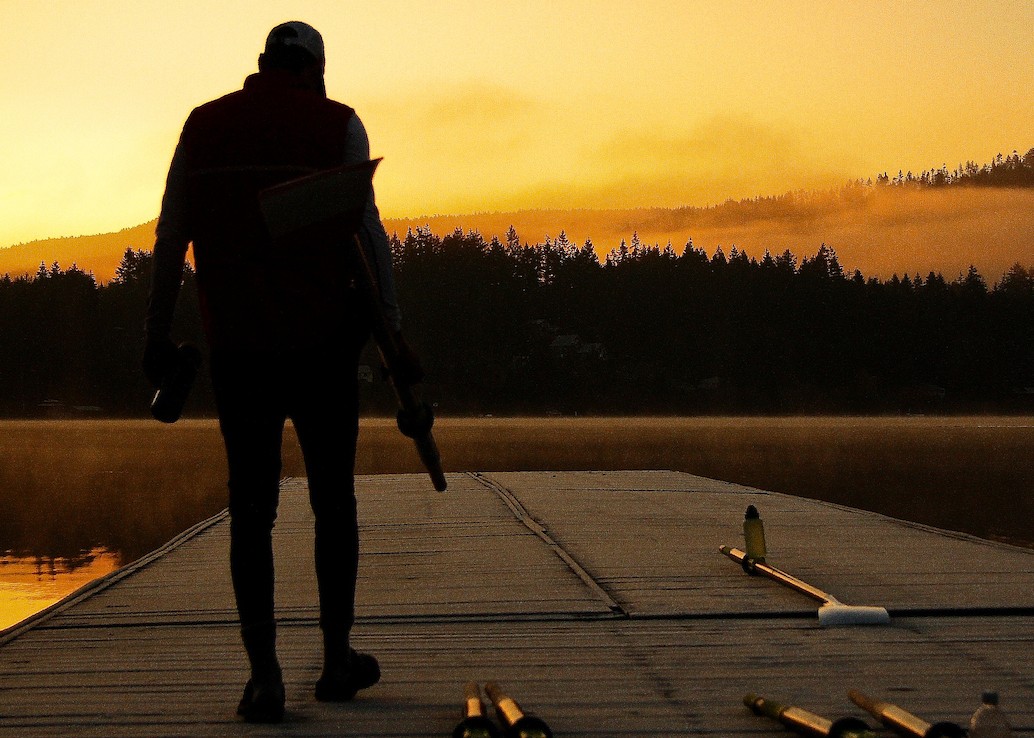
Photo: Kevin Light
I raced at that Beijing regatta too, and I remember how, back in 2003 and 2004, it seemed like everyone in rowing was watching the Canadian style and copying it. That’s the lesson I keep coming back to. As I said to Ed, doing someone else’s training program never helps you beat them. It only helps you get close to them. The Canadians weren’t copying anyone. They knew exactly what they were, and that’s why it didn’t matter who saw the plan.
There’s a lovely footnote too. These men got a $20,000 bonus from the Canadian Olympic Committee for the gold. Dominic Seiterle, the six seat, used his to finish his deck. Kyle Hamilton told Ed he didn’t love rowing as such. He loved what it brought out in him: the discipline, the dedication, the short- and long-term thinking. I reckon that’s what every rower at Mercantile is really chasing.
Photos: Kevin Light, courtesy of The Eight (theeightbook.com).
Listen to Episode 51: Ed Willes, The Eight: Built Through Failure, Forged for Gold
Spotify: https://open.spotify.com/episode/6NRQae5Amm0TLz0Q4xc1dE
Apple Podcasts: https://podcasts.apple.com/au/podcast/ed-willes-the-eight-built-through-failure-forged-for/id1855369498?i=1000785361732


Leave a Reply