
Near the end of my conversation with Jamie Koven there’s a story that explains the title of Episode 60 better than anything I could write.
It was soon after the Sydney Olympics. Jamie was at a rowing function in New York City where Steve Redgrave was being honoured for his fifth consecutive Olympic gold medal. Someone asked whether there was anybody in the room who wasn’t cheering for Steve. Jamie had raced in the four in Sydney, the same event Redgrave had just won.
“And I stood up and I said I was I was racing against him. Thank you for all cheering for the competition.”
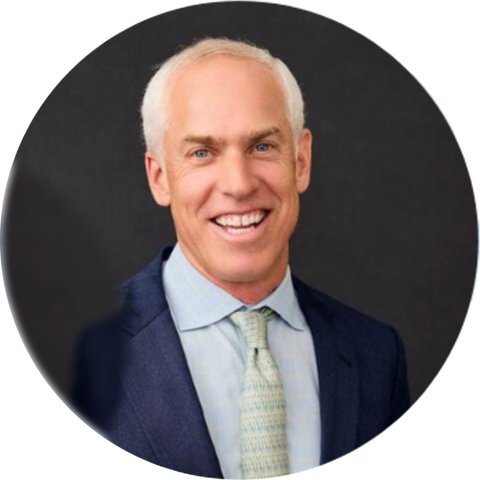
Photo: Mercantile Radio
Jamie is quick to say he and Steve are friends: “We get along. But we were real competitors.” He’d been racing Redgrave a long time by then. As a freshman at Brown he raced Redgrave, Matthew Pinsent and Greg Searle in the international final at the CRASH-B indoor championships.
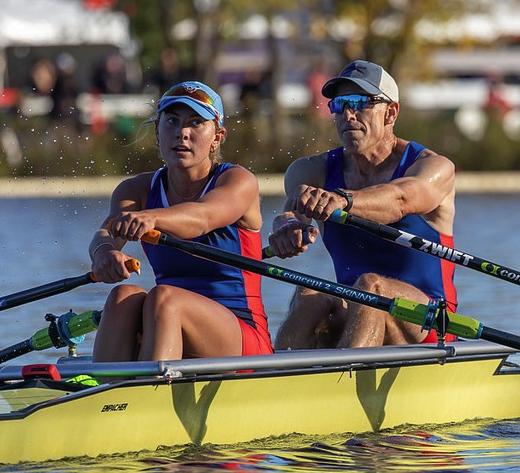
We recorded the episode in Boston at the Head of the Charles, where we were both racing that weekend. Jamie had just got off the water from one of his favourite events, the parent and child double with his daughter Lucy. He told me he’d gone out promising a gentle paddle down the course. Then Lucy turned around: “dad, we’re winning this thing.” The competitive streak clearly runs in the family.
A novice at the World Championships
The part of Jamie’s career I most wanted to ask about was 1997. He’d been an eights man on the US team from 1993 to 1996, winning the world title in the eight in 1994. A year after Atlanta he was world champion in the single scull. I wanted to know how much sculling he’d actually done.
Not a lot, it turns out. In the lead-up to Atlanta the national team coach, Mike Spracklen, had a simple way of getting his sweep rowers into small boats. The serious workout was six by 2K in the pair. The coach wanted them to mix things up:
“So he said, if you don’t have a single, then you have to do that six by two K in the pair on the opposite side. And nobody wanted to do that. It was brutal. And so we all bought singles.”
That was two to four sessions a week, Jamie said, the secondary workouts rather than the ones that counted for selection. It was enough for him to realise he liked the boat. The US eight came fifth in Atlanta, and Jamie says it didn’t feel great. Jamie was 23 and, in his words, “I just wanted to keep going.” A lot of the crew took time off. He’d been planning to go to Oxford, then changed his mind:
“and at the last minute I pulled out and I said, I just want to row the single this year.”
In 1997 he raced every round of the first full World Cup series, got to know the opposition, including Greg Searle, who had also moved into the single, and went to the World Championships at Aiguebelette in France still carrying the fitness from the eight. What I loved is how he described the pressure, or the lack of it:
“There was no pressure because I was a novice in the single”
He won his heat and his semi. By the final he could see it was on, and he wasn’t worried about it: “I’m just going to go out there and have fun and have a great race.” He won on the Saturday. The US eight won gold the next day.
I’ve always believed that freedom matters more than people think. Jamie had the fitness from years in the eight, and he’d done his sculling as the secondary session nobody was watching. When he arrived at the Worlds with nothing to protect, he was able to just row.
Back to a crew
The single didn’t last forever. In 1999 Jamie developed a degenerative back problem that had nothing to do with rowing. He was waking a couple of hours before training just to get warmed up, and he missed a lot of sessions. He decided he needed people around him again: “I can’t go out by myself in the single every day and deal with this.”
So he went back to sweep. The US four hadn’t even qualified for Sydney the year before. They went through the final qualification regatta and came fifth in an Olympic final with Redgrave, the Australians and the Italians in it. It’s the same placing as the eight in Atlanta, but Jamie sees the two results completely differently. Atlanta was a disappointment. Sydney, taking the four from 13th to fifth in a year, was a success: “I felt like it was a real success”.
Small boats and young rowers
Jamie’s son Henry is 12. He wants to row, he wants to row the single, and he’d just raced on the Charles the weekend before we spoke. Jamie isn’t pushing him. He just wishes he’d had the same chance when he was young:
“I think you can make rowing for kids and small boats really fun.”
There’s a Mercantile thread through all of this, too. Jamie and I have a good mutual friend in George Patterson, a Mercantilian who followed him to Brown a few years later, at a time when very few Australians were heading to US colleges. Jamie also talked about why races like the Head of the Charles and Henley matter so much, and it made me think of the Head of the Yarra. Without those classic races, the heart of the sport would be missing.
And the next time I’m in a room cheering for a champion, I’ll be looking for whoever stands up for the competition.
Listen to Episode 60: The Man Who Wasn’t Cheering for Redgrave – Jamie Koven World Champion 94 and 97.
Spotify: https://open.spotify.com/episode/6ZHQHzCSxYFlEWa8m4Suk8
Apple Podcasts: https://podcasts.apple.com/au/podcast/the-man-who-wasnt-cheering-for-redgrave-jamie-koven/id1855369498?i=1000798073796
Read the full episode notes: Episode 60: The Man Who Wasn’t Cheering for Redgrave – Jamie Koven World Champion 94 and 97.


Leave a Reply