
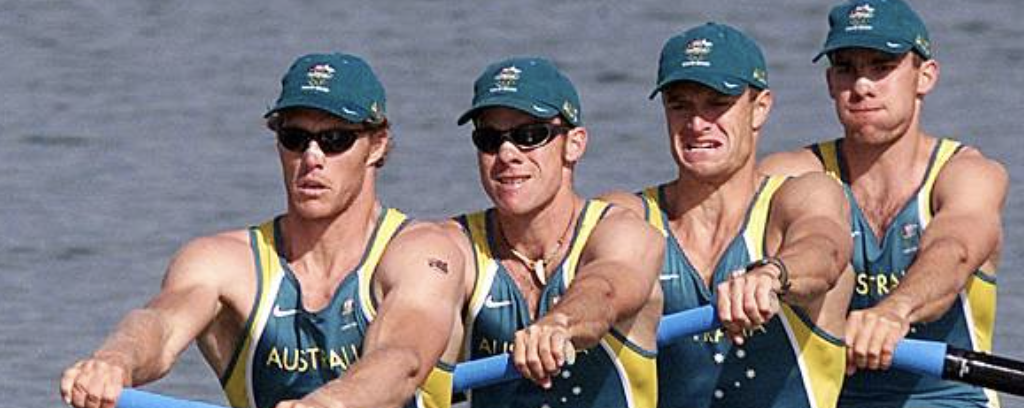
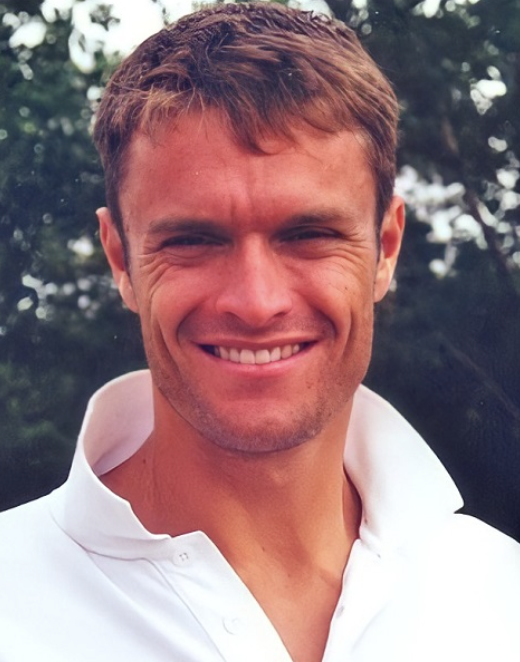
Ben Dodwell has never hidden what makes him tick. “I always found myself wanting to, I guess, size someone up and then try and take them out,” he told me. “For whatever reason, that was kind of the inspiration.”
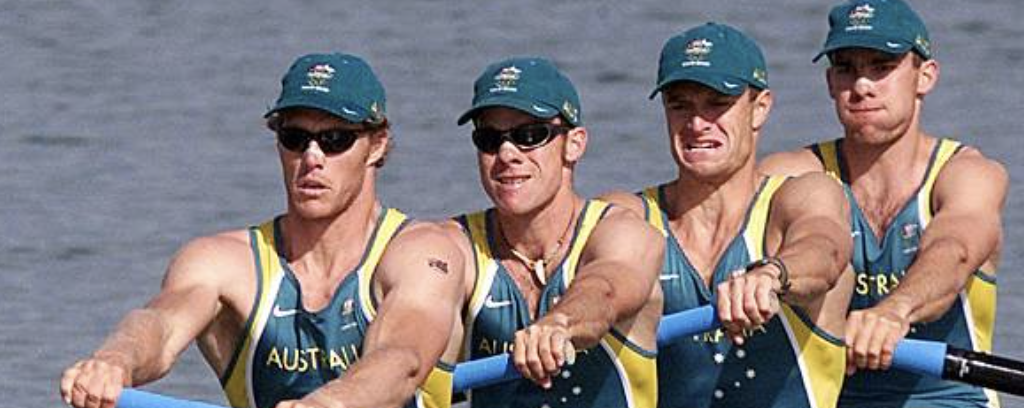
In the lead-up to Sydney 2000, the someone was Steve Redgrave. The great man was chasing a fifth straight Olympic gold in the British coxless four, and Ben, Bo Hanson and the Stewart twins, James and Geoff, were the crew lining up to stop him on home water.
They didn’t stop him. Great Britain won, Italy took silver, and the Australians rowed through for bronze in 5:57.61, less than a second and a half off gold. Twenty-six years later, Ben doesn’t talk about that race, or the many others, in terms of what he lost. He talks about the battles. Spend an hour with him and you start to see why.
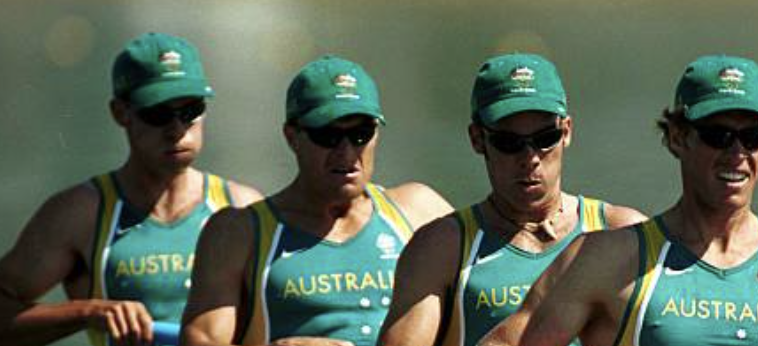
Swept up by the Mercantile machine
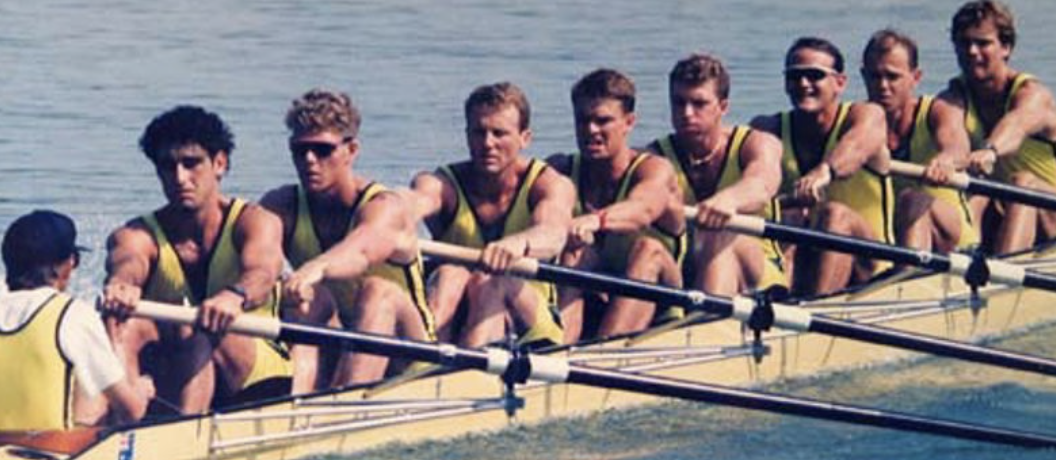
Ben went to Melbourne Grammar, and he didn’t come to rowing as a natural. Someone told him he didn’t need to run or catch a ball, so he gave it a go. His Year 11 crew had a ball. Then in Year 12 the first eight came second last and got rowed through by Scotch. “That was horrible,” Ben said. But his taste for the sport “was sufficiently sweet from the year before” that he decided to give it another go. “That’s why I went down to Mercs, and then I guess got swept up by the Mercantile machine.”
That machine moved fast. In 1992, his first year of senior club and state rowing, Ben was in the Victorian King’s Cup eight and then the Australian eight at the Barcelona Olympics, where they finished fifth. He won the national pair title in Mercantile colours in 1993. Over the next eight years he rowed in a Victorian eight that hardly ever lost the King’s Cup. “It was unacceptable not to win the King’s Cup when you rowed for Victoria,” he said. “It became like a cult thing.”
A club crew against Redgrave
Ben came home from Atlanta in 1996 “bitterly disappointed”. Tim McLaren committed to him, and Ben made a fresh start in Sydney at UTS Haberfield, beginning with a single. “I reckon I spent the first probably four or five months upside down most of the time,” Ben laughed. Getting tipped out behind Cockatoo Island, sharks and all, is quite an apprenticeship.
The four that came out of it was something unusual. Ben was working, not paid to row, and the crew trained out of a club. “We were a club crew,” he said. “If we’d been moved to the Institute of Sport or back to Melbourne or something, I just couldn’t have done it.” They learned to row in any water by racing the Sydney ferries home. They swapped sides and tried everything, including meditation sessions where, Ben reckons, the twins would be snoring within three minutes.
He talked about the twins with real affection. They weren’t massive on the erg, he said, “but they were technically very, very, very good.” Geoff could also defuse any pre-race stare-down. When the Romanians or the Germans tried to eyeball him on the bus to the regatta course, he’d go, “How are you, mate? I’m Geoff from Australia.” They couldn’t keep a straight face.
Ben’s favourite reminder of how easy fast rowing can feel came in Amsterdam in 1998. His four was combined with the Oarsome Foursome, a Dutch cox nobody knew was put in the stern, and the eight was sent out to race. There was every reason it shouldn’t have worked, Ben said, because the two fours were fighting each other for selection. Instead “something just goes off in everyone’s head”. They smoked it. “We did a world’s best time, finished the race and nothing was spiked.” No one was gassed. “That’s how that’s done, right? It was a lesson.”
Before Sydney came Henley in 2000, and the race Ben remembers most vividly. Redgrave steered the British four and “steered a beautiful course”, using every hollow in the Henley stream. The umpires warned Britain to move over at least once. The Australians came at them late and lost by about a canvas. “I came off the water having been beaten,” Ben said, “but thinking that was just a wonderful contest. That’s why we do it.”
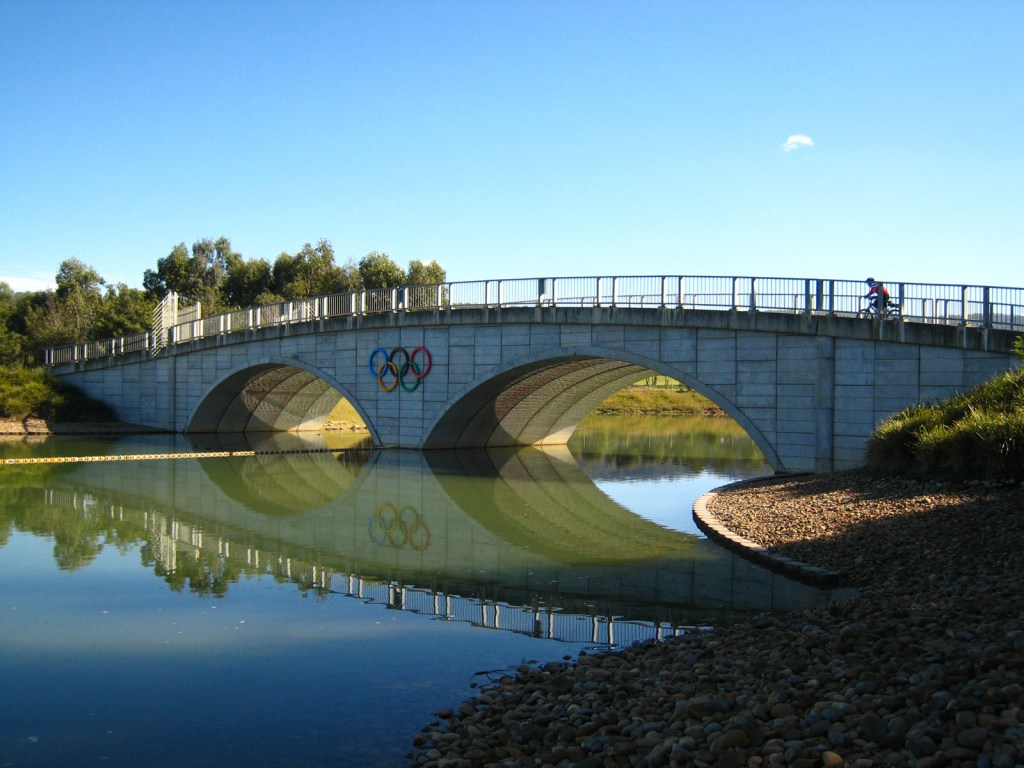
Photo: Hectic18, CC BY 2.5, via Wikimedia Commons (commons.wikimedia.org/wiki/File:Sirc_bridge.jpg)
Perspective from Tim McLaren
As Sydney got closer, Ben admits he got “all in my head” about the home Olympics. Tim McLaren grabbed him “virtually by the ears”, looked him in the eye and asked: if he rang someone in South America right now, would they really care whether Ben won this race? (Tim’s version was a bit saltier.)
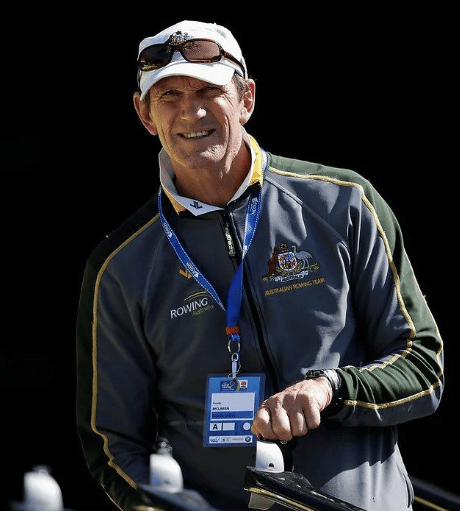
That perspective runs right through how Ben looks back now. He’s grateful for the people he rowed with, and for coaches like Tim and Brian Richardson. Richardson’s Barcelona eight did team-building dinners and talked about life after the Games well before anyone else did. One more twist: the Italian four that took silver in Sydney included Carlo Mornati, who had come out to Australia after Atlanta and rowed a pair with Ben. They’re still friends.
Ben was also generous about our pair years. He said rowing with me taught him to “just back off the pressure at the catch, let’s build the pressure through the stroke”. Kind words, mate.
Giving back
Ben went on to a business career and served on the Rowing Australia board. He remembers the days when the sport “had literally no money”, and joining the board was his way of giving back because he “was eternally grateful”. When he started, Rowing Australia was around a $12 million enterprise, he said. Today it’s “circa a $24 million business”. He has strong views on looking after the people the sport depends on. He worries about “twilight athletes”, the older rowers trying to build a career and a life while still chasing selection. “What we know is the longer you’re in the sport, the more likely you are to win a medal,” he said. “Sometimes it takes time.” He’s also worried that over-regulation is squeezing out the small local regattas that bring kids into rowing.
Rowing taught him to think in four-year blocks. “I think you can walk with a stone in your shoe for four years,” he said. Rowing also left him with gratitude. “We all hold a great deal of gratitude for the sort of people that make us,” he said. And he’s still a competitor at heart. Asked for his favourite drill, he picked feet out, outside arm only, square blade. Why? “Because we were quite good at it.”
What I take from Ben
Ben’s Olympic record is three Games, a fifth in Barcelona and a bronze at home in Sydney. That tells you plenty, but not the whole story. What it misses is a bloke who came back after Atlanta, rebuilt himself in a single he kept falling out of, and helped a club crew take on the greatest rower of the era. To our Mercantile athletes: results matter, but in thirty years it’s the battles you’ll talk about. Pick crews and races that make you want to size someone up and take them on. And when Tim McLaren’s question comes, have a laugh, then get on with it.
Listen to Episode 55: Ben Dodwell: The Battles You Remember
Spotify: https://open.spotify.com/episode/0j0kFlOvu9o8me79QG4YuL
Apple Podcasts: https://podcasts.apple.com/au/podcast/ben-dodwell-the-battles-you-remember-episode-55/id1855369498?i=1000790851109
Episode page: https://mercantileradio.au/2026/09/21/ben-dodwell-the-battles-you-remember-episode-55/


Leave a Reply