
We recorded this one on the banks of the Charles, in a week when Jamie Koven was not, in his own telling, first pick. He was in a 60-plus Australian-entry eight at the Head of the Charles, a world champion drafted into a composite crew, and he sounded delighted about it.
“I think I was the last pick and I feel very lucky,” he said.
If you have already read the story from this same conversation about Steve Redgrave, the year Jamie took up the single, and the 1997 world title that followed, this is a different slice of the same hour. It is about how a boy from a frozen pond learned to get speed in two months, and about a masters eight that still wanted to train.
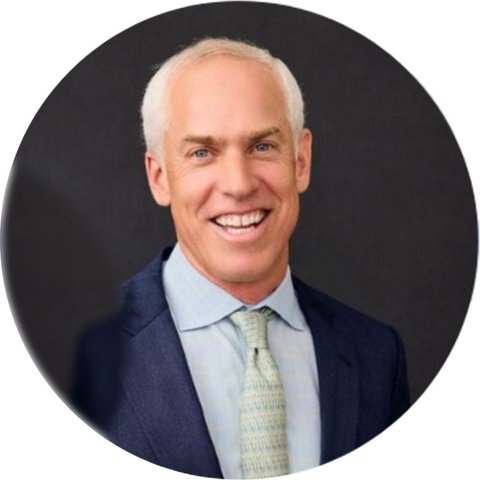
Photo: Mercantile Radio
Last pick in a 60-plus eight
The boat was a 60-plus entry, and it was not a typical Head of the Charles pickup job. Jamie had been impressed with the feel almost from the start. “I’ve been really impressed with the … feel and people really getting into it,” he said. “The first row is a little rough, and it’s been great ever since coming together off the bat.”
Most composite eights at that regatta, he said, show up and jump in. “This is actually … a luxurious setup where you get to row twice a day and do some … practice.”
That is not a small thing to hear from a man who has already been around the course, and around the world, in much faster boats. He was last pick, he was happy about it, and he was treating a masters eight with the same attention he would have given a short, serious season. The luxury was not comfort. It was the chance to practise at all.
Around him were names that will be familiar to anyone who follows the sport: David Crawshay, Alex Partridge, Dick Cashin, Sean Colgan. An Australian entry, with Jamie the American who felt lucky to have been called. They were not sitting around tapering. They were on the water, twice a day, in a crew that had to come together in a hurry, which, as it happens, is a skill Jamie learned early.
A two-month season at Saint Paul’s
Jamie started rowing competitively at school, and he liked the way the year was set up. “I kind of liked it back in the day because we were all encouraged to play a lot of different sports,” he said. “I was only rowing in the spring, and I was up at Saint Paul’s and it was frozen up until like the beginning of April.”
The school is in Concord, New Hampshire. In the north-east of the United States, winter is not a suggestion. “The turkey pond is frozen solid skating on it. Rock solid,” he said. “And then you got to wait for it to melt before you can start rowing.”
So the rowing season was April and May, and then the championships at the end of May, and you were done. In the autumn he played soccer. He also played hockey for a couple of years, and did Nordic skiing for a couple of years. “And so that was my preparation. And then I would focus on rowing. And rowing was extremely intense for me because it was two months and it was just full on.”
There was no year-round program, and no autumn water work. You had to find speed quickly, or you didn’t find it at all.
Pull hard, get out in front
The coaches at Saint Paul’s, Chip Morgan and Rich Davis, rotated through the top boats. They sent a lot of athletes on to the Olympics, Jamie said, and they were very good at one thing in particular. “They were really good at sort of getting people just to figure out how to pull hard.”
He was careful about this. They did learn how to row. “But the focus was was pulling hard.” Physicality. Aggression. “Get out in front and stay in front.” A lot of shorter pieces, high rating, high intensity, so that by championship day you were race-ready. It was, he said, very different from the Australian system, and different from a lot of American programs now, where people row all year. “That’s what it took in order to be fast. If you only had a two month window.”
It was also an eights school. Every so often they would go out and forage for a smaller race, but the work was in the eight. “It was an eight school, and we didn’t really have time, so I didn’t … know single sculling.”
How he later learned to scull, and what happened when he did, is the other story from this conversation. The schoolboy version of Jamie is still the one I keep coming back to: two months, a frozen pond, and a very clear idea of what the work was for.
Coming back together: the 1994 eight
A few years before this Head of the Charles, Jamie had been out again with the United States crew that won the world championships in Indianapolis in 1994. Reunion boats are a feature of the Charles, and of Henley, and he clearly loves them. “We won the World championships in 94,” he said, and then, of that Indianapolis day: “Windy wind windy. Very windy that day. And we had almost the whole boat. But like it was great.”
The 1994 United States men’s eight did win that world title, on a championship course in Indianapolis that the record books still list under their names. What Jamie wanted to talk about, standing at the Charles all these years later, was not the medal ceremony. It was the pleasure of getting the band back together, and the fact that people were still eyeballing him. “People want to take you down,” he said, not unhappily.
That is the thread that runs from Saint Paul’s to a 60-plus eight. You get a short window. You work at high intensity. You try to get out in front. And then, if you are lucky, you get to do it again with the people who were in the boat when it mattered, or with a mixed crew that has made you last pick and given you two practices a day into the bargain. The standard does not drop just because the entry is 60-plus, or because someone else made the first pick.
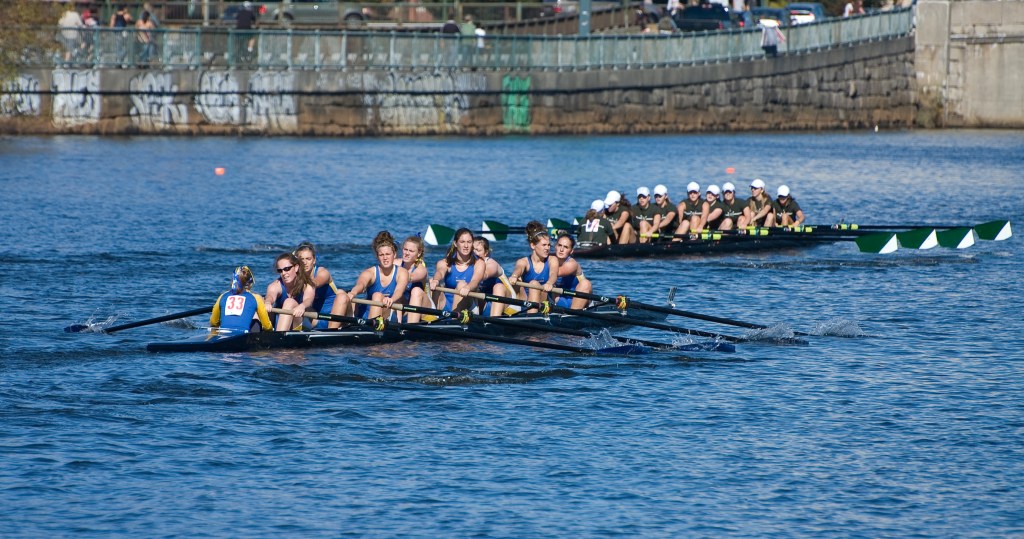
Photo: Fcb981, CC BY-SA 3.0, via Wikimedia Commons (commons.wikimedia.org/wiki/File:Head_of_charles_eb1.JPG)
What I take from Jamie
The published piece from this episode is about a man who stood up for the competition in a room of Redgrave fans, and about the year he took up the single and won. This one is about the conditions that made him: a two-month season, a pond you could skate on, coaches who taught him to pull hard, and a 1994 eight he is still happy to row with.
To our Mercantile athletes, especially the ones who think they need a twelve-month program and a small-boat pathway before they can get serious: Jamie became a world champion from a school that rowed eights for eight weeks a year. The constraint was the point. And years later, a world champion can still be the last pick in a masters eight, feel very lucky about it, and turn up for the extra session. That, too, is a kind of championship standard.
Listen to Episode 60: The Man Who Wasn’t Cheering for Redgrave – Jamie Koven World Champion 94 and 97.
Spotify: https://open.spotify.com/episode/6ZHQHzCSxYFlEWa8m4Suk8
Apple Podcasts: https://podcasts.apple.com/au/podcast/the-man-who-wasnt-cheering-for-redgrave-jamie-koven/id1855369498?i=1000798073796
Episode page: https://mercantileradio.au/2026/10/26/the-man-who-wasnt-cheering-for-redgrave-jamie-koven-world-champion-94-and-97/


Leave a Reply