
Eric Murray reached out because, as he put it, the show probably needed some talent. He had been listening. He had seen other New Zealanders on the list. And then he was in the chair, talking about afternoon beer, bow-seat manners, and the years when the fastest work he and Hamish Bond ever did did not happen on a championship start line.
“When we actually dive deep into what we were doing with Hamish and I, I’m behind him the whole time,” he said.
That is the sentence I have been turning over since. Not the gold medals, though those are real enough: Olympic champions in the men’s pair at London 2012 and Rio 2016, the most dominant pair of their era. The work underneath, and the long road that came first.
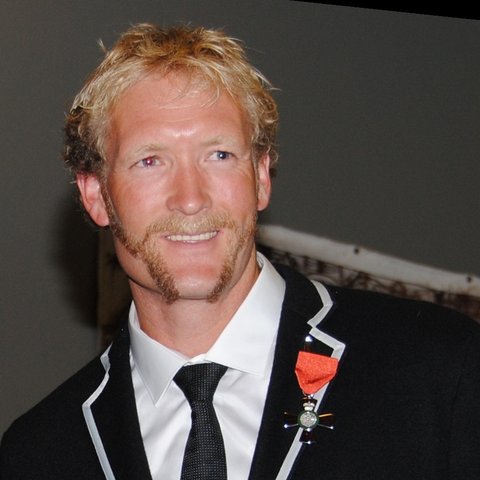
Photo: Mercantile Radio
Behind him the whole time
Eric has never been a bow-seat in a four or an eight, “because I’m a big bastard.” In the pair, though, the bow seat is, as he said, probably the make or break. Someone fighting the stroke seat “is just never going to go.”
What he and Hamish worked out was almost the opposite of that fight. Eric sat behind him, and stayed there. “If you’re trying to get in front of the boat and you’re trying to get on top of it and trying to probably produce the same power as everybody else, you’re just putting lateral force on the boat and you’re slowing it down.”
A good bow person, he said, has “some very nice feel, patience in the take-up, which allows you to actually have a nice rhythm and a straight boat that doesn’t fishtail.”
It sounds simple. It is not the story people usually tell about a pair that spent years at the front of the field. The dominance, in his telling, started with patience, and with not getting on top of the boat.
Green as
That pair did not arrive fully formed. In 2004, at his first Olympics, Eric was in the New Zealand four. “The 04, we were green as, right? We were inexperienced. I’d only been to World Champs in the Cox 4 in 03.” They went to Athens with no great expectations. They had been second in a B final in Lucerne, and so, he said, “going into the games, our final was our semi-final.”
They made the Olympic final. They raced the semi hard, “100 percent,” and two days later they had nothing left in the tank. “We’re sort of lucky we beat the polish and got fifth.” Officially, the New Zealand four finished fifth in Athens. Four years later, in Beijing, he was in the four again, this time with Hamish Bond, Carl Meyer and James Dallinger, and they finished seventh.
Those Games were not what they had planned. A new coach came in, watched about two minutes of the first row, and stopped them. “You guys are working so hard,” Eric remembers him saying. “Why are you working so hard?” The New Zealand habit, as Eric described it, had been to push as hard as you could every time. Feel, and synergy with the boat, had to be built on top of that.
Temper the power
Once he and Hamish settled into the pair, the problem was not a lack of engine. “I was extremely powerful,” Eric said. “I wouldn’t say I had the endurance fitness that I needed to at the start, especially to sort of handle the training, especially under … Tonks.”
Dick Tonks’s methods are a matter of public record and of strong feeling; Eric did not dress them up. What he did say, clearly, is what he had to change in himself. “I needed to temper my ability, which was my power, and be able to transfer that into the fitness needed through the middle of the race, to keep up with Hamish.” Hamish, he said, could hold extraordinary wattages for a long time, but he was not the outright most powerful person around. They had to find the balance.
“Things work reasonably well. You don’t need to change a lot,” he said. “And so we tinkered with things slightly. We tried to figure out how to move the boat and be patient.” The speed, once they did, was there.
They were still making that kind of judgement in 2016. When they turned up that year they were given new riggers on a new boat, to race at Lucerne and then ship to Rio. They trained in it and did not like it. They asked for the boat from 2013. It was still there, so they sent that one to Rio instead, and it felt much better. Not every change is an improvement. Sometimes the work is to notice what already moves, and leave it alone.
The races that weren’t races
By the time they turned up in London, they were doing some fantastic work. And then Eric said the thing that has stayed with me most from the whole conversation.
“A lot of the best races I think we ever had were not actually in racing.”
Ten days out from the Olympics, on Lucerne, they went out against Nathan and Joe, and against Pete and Storm. They were level with Pete and Storm, and only about five seconds off Nathan and Joe. They beat Pete and Storm. Nathan and Joe only just passed them in the final sprint. “We did 6.15 on a flat Lucerne,” Eric said. Coaches can sync their watches on every mark they like. “The GPS don’t lie.” He did not think anyone in the world could do that pace. When they built into London on the back of that, he already knew what was coming.
That 6:15 is his recollection of a pre-Games piece, not the Olympic heat in which he and Hamish later set a world best of 6:08.50. The point he was making did not depend on the official record. The work that told them they were ready was not the final.
The exercise he comes back to is one they learned in the four, with coach Chris Nilsson. “I think it’s what made us find really good speed was what we called builders.” You built the speed of the boat “with the intention of boat speed, not the intention of … trying to get racing.” A bit more travel, a bit quicker going forward, then again, and again. “If you started feeling like you were forcing it, you’d just take it down.” Then you paddled, and you built it again. The journey was not to force race pace. It was to get there efficiently, and then not to slow the boat down.
What I take from Eric
The medals are easy to list. Two Olympic golds in the pair, after a fifth in the four in Athens and a seventh in Beijing. What the list misses is a stroke-seat bow pairing that worked because one man was prepared to stay behind, temper a huge amount of power, and trust sessions that were not even races.
To our Mercantile athletes: if you only count the pieces with a start gun, you will miss the work that actually tells you where you are. Build speed without forcing it. Stay behind the boat rather than on top of it. And if a session on still water, ten days out, is the fastest you have ever been, believe the GPS. That might be the race that matters.
Listen to Episode 23: The Mechanics of Dominance with New Zealand Legend: Eric Murray- Episode 23
Spotify: https://open.spotify.com/episode/4kM7JgW87TeWSfMWilC6BU
Apple Podcasts: https://podcasts.apple.com/au/podcast/the-mechanics-of-dominance-with-new-zealand/id1855369498?i=1000752362354
Episode page: https://mercantileradio.au/2026/03/02/the-mechanics-of-dominance-with-new-zealand-legend-eric-murray-episode-23/


Leave a Reply