
Some of the people who came up to Cameron McKenzie-McHarg and Kate, in the early days of 776BC, did not offer a soft warning. They were blunt.
“Just don’t, just don’t do it,” Cameron remembered them saying. He and Kate would answer that they were going to create something really special, really cool, “really athlete centric,” and that it was going to be an amazing ride. The reply did not change. “We know what’s involved, just don’t do it.”
Years later he can say, without bitterness, that he understands why they said it. He said it anyway, and they built the thing. That instinct — start, even when the room is not with you — is also the way he talks about the four that had to qualify for Beijing at the last chance, and then came home with Olympic silver.
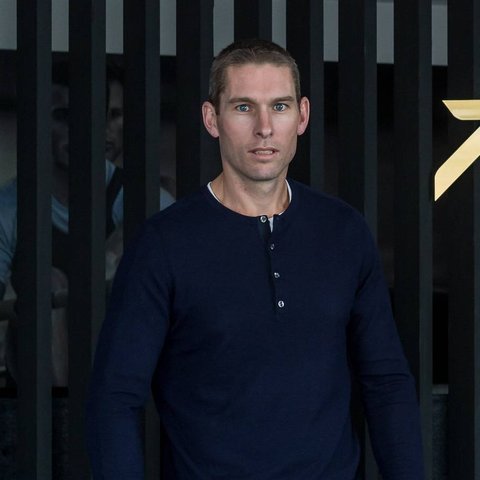
Photo: Mercantile Radio
Just don’t do it
Cameron had been an athlete at a high-performance level, “and worked in finance a little bit.” Kate worked in brands and marketing. Between them they had a lot of useful experience, and still, as he tells it, the first years of a company are a test of nerve. In a boat, he said, the people around you are pretty aligned: you know why they are there. In a business, the motivations are more mixed. “It’s hard to sometimes transfer that to people that they’re not there to win a gold medal.”
The episode title on Spotify is “The Naivety to Begin.” He did not need to dress the beginning up as a perfectly designed plan. He went back through those early conversations and landed on a simple sentence: some people tapped them on the shoulder and said don’t do it. “And you go, yeah, I … understand why.”
Understanding why, and doing it anyway, is the whole story. He is not claiming they were reckless. He is saying that the first years asked for the same commitment he already knew from high-performance sport, in a setting where nobody around the table was chasing a medal.
A simple four
Before the apparel company there was the 2008 season, and a coxless four that Cameron still talks about with real affection. He had come back to rowing in 2001 after school, and had played around with football for a bit. He had had seasons that went well, and a lot that did not. That year, he said, was different. “Really simple what we’re trying to work on.”
The boat was Matt Ryan, James Marburg, Cameron, and Francis Hegerty, coached by Tim Conrad. They were not the first-choice Australian eight. They had to make their own crew. What they had, Cameron said, was four blokes with similar personalities. “We got along naturally.” Without a lot of friction, they could get to work on feel instead of spending the season managing clashes.
That simplicity is easy to skip past. It is also, in his telling, why the boat felt special: a clear framework, an honest way of keeping themselves accountable, and a crew that could produce the work they wanted to put together in a season.
He had been in enough mixed seasons to know what the alternative feels like. When a crew has to spend its energy on personality, the technical work comes second. This four could go the other way. The connection in the boat, as he described it, was the thing that made the season worth remembering, as much as the result that followed.
Lucerne, and exceeding expectations
Out of all his best rowing moments, Lucerne that year sits near the top, not because everyone expected them to be there, but because almost no one did. They were trying to make the Olympic qualification. “We had to go qualify the … boat through the … last qualification.” Realistically, he said, “our goal was to turn up and beat everyone that was going to be at the qualifying event,” two or three weeks later.
They knew the training had been tracking well. They knew they had speed. And then they put a body of work on the water and landed in a place that still makes him pause. “If you can ever exceed your expectations, then that’s … a pretty … special place to … land.” They were, he said, “well ahead of our expectations,” which let them go into the next phase with a lot of confidence.
The next phases were the last-chance qualifier — the official regatta was in Poznań — and then Beijing. A crew that had begun the year trying to beat the boats it would meet at qualification had given itself a different problem: how to race, from the front, at an Olympic Games. In the final at Shunyi, Australia led for a long way. Great Britain, the defending champions in the four, came through late and won in 6:06.57. Australia took silver in 6:07.85. France were third. Cameron’s own reading of that British four was not an excuse. Their own strength, he said, was “consistency of speed.” The crew that beat them had another gear at the end.
Trust the rate
One of the great inputs from Tim Conrad, as Cameron remembers it, was not a call for more pain. They had tested their speed at different rates, at 40 and at 38 and 36, and then at 36 and 35. “We’re … actually going faster and less effort.”
It was a real mental hurdle. “I don’t know about this, like doesn’t feel right … I’m not hurting enough.” The speed was there, “but we weren’t … just redlining.” They had to trust it: drop the rate, keep the boat moving, and not confuse discomfort with speed.
That is a hard lesson to take into an Olympic final, when a crew with a finishing kick is coming at you. It is also a lesson that transfers. Cameron has thought about it a lot since he stopped racing. “As a retired athlete you start to realise a lot of stuff after.” He is not sure he changed enough while he was still in the boat. He enjoyed the competitive side, and going to work on clear goals. The later clarity is part of why the 2008 four still looks, from here, like a model: simple work, a crew that got along, and a willingness to believe the boat when it was fast and not yet hurting.
What I take from Cameron
The medal is Olympic silver in the men’s four at Beijing, after a last-chance qualification and a season that began with low expectations. The company is 776BC, started with Kate when plenty of people were telling them not to. He went on to a second Games, in the eight at London 2012. The through-line is the same.
To our Mercantile athletes, and to anyone thinking about a life after the boat: the room will not always be with you. Some of those people will even be right about how hard it is. Listen to them, understand why they are saying it, and then, if the work is simple and the crew is honest, go and do it anyway. Exceeding your own expectations is a pretty special place to land. So is building something you were told not to start.
Listen to Episode 17: The Naivety to Begin: Cameron McKenzie-McHarg on Beijing Silver and the creation of 776BC- Episode 17
Spotify: https://open.spotify.com/episode/0WVHSLqrY2HFupJEBGRL0I
Apple Podcasts: https://podcasts.apple.com/au/podcast/the-naivety-to-begin-cameron-mckenzie-mcharg-on/id1855369498?i=1000745663516
Episode page: https://mercantileradio.au/2026/01/19/the-naivety-to-begin-cameron-mckenzie-mcharg-on-beijing-silver-and-the-creation-of-776bc-episode-17/


Leave a Reply