
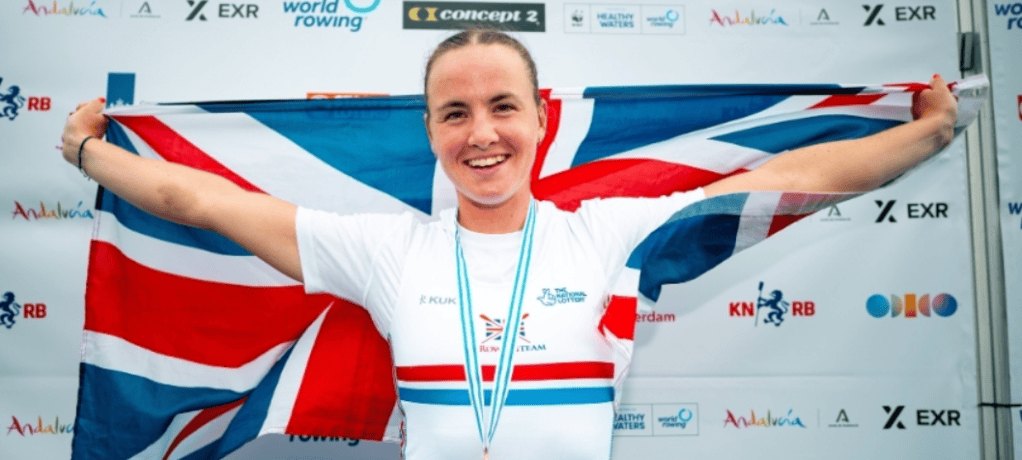
Before Lauren Henry became the first British woman to win the world title in the single scull, she stayed somewhere most people leave.
“Quite unusually, I stayed, at Leicester, which is like just a small community rowing club, … right the way through. And so I got on the team.” She never trained at a university club. “I never went to a big club.”
That is the part of her story I wanted to sit with. Not the final in Amsterdam, which I have written about elsewhere, but the club that got her there, and the boat on top of the car.
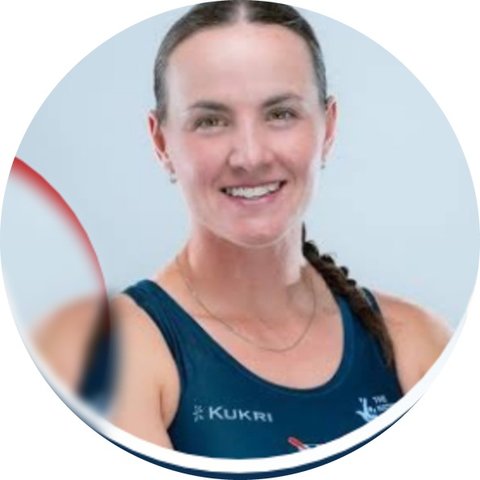
Photo: Mercantile Radio
“I was adamant I did not want to go in the single”
She did not start out as a single sculler. For ages, she said, she was set against it. “I was adamant I did not want to go in the single.” She cried about it. “I was like, no, I don’t want to go in single.” Then she started single sculling, and she started to win in it. “I thought, oh, this is good. I like this.”
From there, the weekends took on a shape that a lot of club rowers will recognise. “I tell my parents, you know, where I wanted to race, … go for the weekend with the boat on top of the car, go and do a couple of regattas. And it was very fun.”
She still misses that. “I missed that side of the sport quite a lot now because I feel I can do a lot of training for like, no racing.”
A year on her own
She was very set that she wanted to be a single sculler, and that she was going to train. In her last year at Leicester, that meant doing it almost alone. “I trained completely by myself.”
The club could not give her a full-time coach, but she was not entirely without help. The under-23 head coach, who was at Bristol, “was great.” He wrote her a program and coached her once every other week for a day. When there were junior camps, he got her on them as well, “so he could coach me while the juniors were all rowing.”
It was not a big-club system. It was a young woman arranging her own work, and a coach prepared to meet her in the gaps. She had already made the decision in her own words. “I’m going to be a single sculler and I’m going to do it by myself. … which is a hard way to do it.”
I keep thinking about how ordinary that would have looked from the bank. A single on a Leicester stretch. A session plan from someone who could only be there every other week. No university boat-bay. No big-club group to sit in behind. And a young athlete who had decided, quite firmly, that this was the boat she wanted, even when the hard way was the only way on offer.
Onto the team, still the baby
That path got her onto the British team. It also asked her to leave home. She had not moved away from her parents. To be on the team, she had to go down south, near Henley. Looking back, she is clear that the next step — into a crew, rather than straight into the senior single — was “100%, you know, the right decision.” It was difficult at the start. She was very much the baby of a group that was already well established.
None of that erases the years before it. The team came after a long stretch in which the serious work of becoming a single sculler happened at a community club, on weekends, with her parents driving, and then, in that last Leicester year, largely alone. She did not wait for a big program to give her permission to be a single sculler. She decided, and then she found the people who would help at the edges.
The single never really left her, though. If you asked anyone on the British team, she has said, they would tell you she is a single sculler who ended up in a crew. The club years explain why. She had already chosen that boat, already put it on the car, already trained through a year when there was hardly anyone else in it with her.
The fun she still looks for
What I loved in this part of the conversation was not a training secret. It was how lightly she still talks about those early weekends. Tell your parents where you want to race. Put the boat on the car. Go and do a couple of regattas. It was very fun.
That is easy to lose once the work becomes a full-time program and the racing is rationed out through a season. Lauren can feel that loss from the inside. She now does a lot of training, she said, for not a lot of racing, and she misses the other version of the sport.
The lesson is not that high performance should be a string of casual weekends. It is that the love she is racing with now was built on days that looked like club rowing, in a small community club, with a family willing to drive, and a young athlete who had changed her mind about the single once she felt what it could do. She had been adamant she did not want that boat. Then she won in it, told her parents where she wanted to race, and kept going, through a year when the work was mostly hers alone.
That is a very particular kind of courage. Not the courage of a world title, which I have written about already, but the courage of doing it by yourself, in a small club, the hard way, long before anyone is watching the result.
What I take from Lauren
We talk a lot about pathways, and we sometimes talk as if the only serious path runs through a big club or a university. Lauren stayed at Leicester, trained through a year largely by herself, and still made the team. She did it because she wanted to be a single sculler, and because someone met her every other week and took her seriously.
To our Mercantile coaches, and to anyone sitting in a smaller club wondering whether that is enough, her story is a useful correction. You can build a world-class single sculler from a community club, a boat on the car, and a year of work that nobody much is watching. She said herself it was a hard way to do it. She did it anyway. The medals come later. The decision happens first, on a weekend, when a young athlete tells her parents where she wants to race, and they go.
Listen to Episode 54: The Courage to Go Solo: Lauren Henry
Spotify: https://open.spotify.com/episode/4GJZaP1evF2ORLwGEaV3gp
Apple Podcasts: https://podcasts.apple.com/au/podcast/the-courage-to-go-solo-lauren-henry-episode-54/id1855369498?i=1000789396509
Episode page: https://mercantileradio.au/2026/09/14/the-courage-to-go-solo-lauren-henry-episode-54/


Leave a Reply