
By the time Mags Cremen got to Paris, she was already asking herself a hard question. It was an Olympic year, she was tired, and lightweight rowing was about to leave the program.
“Am I going to continue rowing after Paris? I don’t know.” In a way, she thought, it could be a fitting ending. She had been to two Olympics. In the final of the lightweight women’s double, with Aoife Casey, “we were in the Olympic final and we were a fifth.”
“I think initially, like, we were disappointed, but we were so proud of that result.” In any final, she said, you want to win a medal, or win it. They were proud of making the final. Then, after a break, something else arrived.
“I do miss the sport. Like I do love the people I’m surrounded with every day. I love … just the opportunities it brings, the joy it brings, my family, everything like that.”
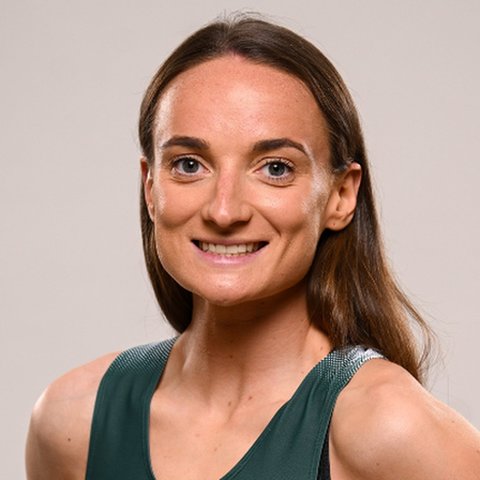
Photo: Mercantile Radio
Friends, not superheroes
The Olympic chapter had started in Tokyo. The Irish lightweight double got the third qualifying spot, “such a dream come true,” and they went to the Games and came eighth. They were really happy about it, she said, because their races were good, and they were still finding their groove, including the work of making weight.
They were not doing that work alone. Their teammates Fintan McCarthy and Paul O’Donovan were already in the boat park, already leaders in the same lightweight world, and already, in her telling, doing the hard parts in the healthiest way they could. Then those friends won gold.
“Seeing our friends win a gold medal, you know, it’s just so cool. … When they’re your friends, I suppose you know that they’re human.” When she was younger, and she saw people on the telly, they were superheroes. “When it’s your friends, it just, it hits your friends.”
I loved that correction. A gold medal in the next tent does not become smaller because you know the people who won it. It becomes usable. You can learn from them. You can see that they are human, and still go looking for your own final.
The race with no medal on the line
After Tokyo they wanted to be in the final they had only watched. They won bronze at the 2022 World Championships, and then, after those Worlds, Mags got glandular fever, which disturbed the season. They recovered. They had a good winter’s block. They had a good regatta in Belgrade. And then they missed the A-final.
That meant they did not qualify for Paris directly. They were in the B-final, and they had to win it.
“I think that was probably the race that I’m most proud of. To be honest, even though it wasn’t a medal on the line. But you know, there was a lot on the line, … to win the race, to qualify.”
They won it, they got there, and they went all the way to Paris and made the final. “We were just proud of our whole journey. Like there was so many … downs. But … the journey so special to me, … because … we really stuck together through everything.”
A fifth in an Olympic final is a result people can see. The race she is most proud of is the one that only looks like a B-final, until you remember what was sitting on it.
“How can I get fast”
She did not want to go back into the sport with a single demand attached. “I didn’t want to go into it being like, I want to win a medal. … Or I won’t be happy.” What she wanted was to enjoy it. “As long as I enjoy it, I’ll keep going. … If that’s all the way to … LA or it’s not, I don’t know.” Even racing as a heavyweight, she did not know whether she would make the team.
“As long as I enjoy it, I’m gonna keep doing it because I … love everyone I train with every day. You know, we’re like a family.”
In January, after Paris, she went back and started training. The first challenge was mental. “I wouldn’t be strong on the rowing machine … compared to everyone, like, so that obviously does get you down sometimes. So you … do have to figure out ways, okay, how can I get fast.”
It has been enjoyable, she said, and the extra fuel has been part of that. The double, though, was always the boat. “Even as a junior like the double was always my favorite boats. … I always loved the doubles.” To have a gold medal in it, later, at the World Championships, was “a little dream come true for like, … small me.”
“There’s no way I can do that”
When I asked her about the work that actually built her belief, she went back to a session that, at first sight, she could not see herself finishing. “Going into that session I was like, there’s no way I can do that. Absolutely no way. But you do. You can do it and you can get through it even though it looks so hard. … And then it gives you relief. Okay. I did do that.”
That is a very different kind of confidence from the one you get by watching superheroes on the telly. It is the confidence of walking away from a session you were sure you could not do, and knowing that the racing will not be harder than the work you have already survived.
When I met her she was in Australia for the Golden Oar, a long way from a five-degree day in Ireland, and still sounding at home. “Rowing is the same everywhere you go. … Although it’s like a new place and stuff like that, you know, it’s it’s your comfort zone.” She talked about coming across the world to do what they love, to make friends, and to see beautiful places. That sounded like the same person who could look at a session and say there was no way she could do it, and then do it anyway.
If you want a picture of where she still feels at home, she named the National Rowing Centre in Cork. On a gorgeous day, she said, “it’s just a dream.” She loves racing the national championships there every year. Friends and family come to watch. That is the place the junior who loved the double, the Olympian who came fifth, and the woman who decided to keep going, all still meet.
What I take from Mags
A published story already sits on the storm, and on the night before the World Championship final. This is the other half of the same person. A fifth in Paris that could have been an ending. A B-final she is more proud of than some medals. Friends who stopped being superheroes once they were in the same team. And a January in which she was not the strongest on the rowing machine, and went looking for another way to get fast.
The lesson I will keep repeating at Mercantile is the one she gave herself after the break. Miss the sport honestly. Love the people. Do not make a medal the price of being happy. And when a session looks impossible, go in anyway, so that later you can walk away and say, quietly, that you did do that.
Listen to Episode 62: From Lightweight to World Champion: Mags Cremen | Irish Rowing Champion
Spotify: https://open.spotify.com/episode/0AmB4u1RQOm3BJIH27PvCs
Apple Podcasts: https://podcasts.apple.com/au/podcast/from-lightweight-to-world-champion-mags-cremen-irish/id1855369498?i=1000800627440
Episode page: https://mercantileradio.au/2026/11/09/from-lightweight-to-world-champion-mags-cremen-irish-rowing-champion/


Leave a Reply