
I asked Pam Westendorf what it was like going to the Olympic Games in Moscow, in the first Australian women’s crew the sport ever sent. She did not reach for a soft word.
“Daunting. Frightening. Brand new,” she said. “We were racing women who are probably twice our size. … Frightening is probably the best word for it.”
Then she said the sentence that has stayed with me.
“I suppose in some ways we didn’t know that we should have been there.”
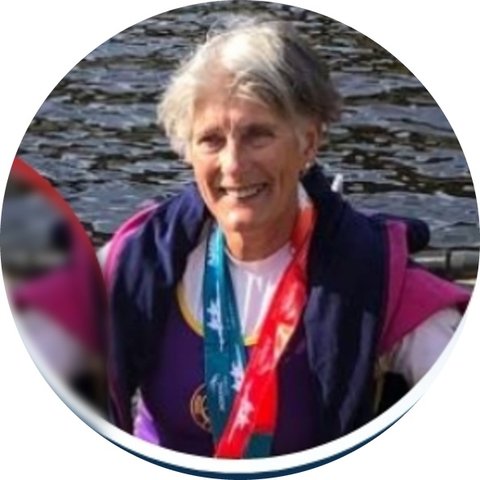
Photo: Mercantile Radio
Undercover, a little bit
There was a lot of politics around at the time, she said, aimed at stopping Australian athletes from going at all. “We went over and raced, but it was sort of felt like it was undercover a little bit.” They did not march in the opening ceremony, though, as she pointed out, rowers normally don’t. Only afterwards did she realise they had not been under the Australian flag at all. “We were racing under the international flag.”
Getting there had been harder than the race itself. “The six months leading into it, we didn’t know whether we’d be going over there or not.” The boycott was on. Teams, she said, were being pushed not to go, in every way people could think of. “There was teams being paid. There was teams being bribed. There was teams being … coerced not to go.”
In the rowing, she thinks they were fairly lucky. John Boultbee and Reinhold Batschi protected them, to a big degree, from a lot of that. At the time, she said, they were not quite sure why. The training camps were kept out of the cities: Murray Bridge, then Penrith, then Bundaberg. Pretty much as soon as they got back, they had two days off, and they were on a plane to Europe, still not knowing whether they were going to race in Moscow or not.
They did race. They came fifth, in a four of pioneers: Anne Chirnside in the bow, Verna Westwood in two, Pam in three, Sally Harding at stroke, and Susie Palfreyman in the cox’s seat. David Palfreyman coached them. Pam was 20.
“I was the baby”
When she came along, she was the young one in that crew. “Just the baby. I was the baby. They still treat me as the baby.”
The other women had been some of the pioneers of the rowing. “They were amazing. They were really amazing.” What she took from them was not a speech, but a standard. “The role models, these girls set, the training standards they set. And how we rode was … fantastic.” That, she said, is “something I’ve taken with me all the way through the rest of my rowing.”
I keep coming back to that. A 20-year-old from Dimboola, sitting in a boat with women who had already been opening doors, racing crews who were probably twice their size, in a Games that some people had tried to talk them out of. She did not claim to have built the pathway. She said she was the baby. The other women had the experience. She had the seat, and she had her eyes open, and she has carried those standards ever since.
That is how a standard actually travels. Not as a speech, and not only as a result. As a young athlete watching how the older women trained, how they rowed, and what they were prepared to go through to get on the start line at all.
No support, no funding, no anything
When I asked what it is like now, looking at women’s rowing from the vantage point of that first crew, she almost could not find a word for it.
“It’s nearly indescribable. You can’t, you know. I don’t know how to think about it.”
They had to work hard. They also had to work in a way that is easy to forget. “We were pre any sort of support. No support, no funding. No anything. So we … had to work to get funding out for ourselves.”
That is the part of the pioneering story that does not sit on a results sheet. Before there was a system, there was a group of women organising the money to get themselves to the start line, and then going anyway, even when they were not sure they should have been there.
The change she has watched in the sport is simple. “I think the acceptance of women as rowers is the number one big thing. From where it’s come from to where they are now is massive.” Hearing her talk about no support, and then about a women’s program that now runs through clubs like ours every day, you can feel the distance.
The happy spot again
She is still on the water. I asked what the masters rowing is like, and she did not hesitate. “I love it.” Why? “You’re out on the water doing something you love. It’s the happy spot again. You’re doing it with people that are there doing the same thing.”
She still talks about rowing with an older group of women. “It’s such fun. … They don’t take themselves very seriously.” They have coffee for as long as they are on the water. “About an hour of each.” When we spoke, they were heading up to Bled. The belonging is the same one she has described all the way through her life in the sport, only now there is no boycott, and no one is asking her to justify being in the boat.
That belonging is practical. It is the friendships, and the feeling, when you finally get it right, even if it is only for a stroke or two. It is also just being out there with people who want the same thing. She still talks about those first crew-mates as if they are in the room. They still treat her as the baby. The training standards they set are still the ones she measures things by.
What I take from Pam
I have known a bit of this history for a long time, and I still sat there turning her first words over. Daunting. Frightening. Brand new. A crew that did not fully know it should have been there, and went anyway.
The lesson I will keep repeating at Mercantile is not only that women had to fight for a place on the Olympic program. It is that the baby in the boat was watching. She saw the role models, she saw the standard, and she has spent the decades since staying on the water, still looking for the happy spot, still doing it with people who are there for the same thing. If you want a picture of what a pioneering crew leaves behind, it is not only a fifth place in Moscow. It is a woman in her later seasons who still loves it, who will sit for an hour of coffee after an hour on the water, and who never quite stopped being taught by the people who got her there. The baby of the crew became, in her own way, part of the standard she once watched. That is a long gift, and it is still being used.
Listen to Episode 52: Pam Westendorf: The River Is My Happy Place
Spotify: https://open.spotify.com/episode/0E9gw50jSM7xcDgPauXaUt
Apple Podcasts: https://podcasts.apple.com/au/podcast/pam-westendorf-the-river-is-my-happy-place-episode-52/id1855369498?i=1000786880959
Episode page: https://mercantileradio.au/2026/08/31/pam-westendorf-the-river-is-my-happy-place-episode-52/


Leave a Reply