
Rosie Popa grew up inside the sport in a way most people never do. Her mum is Sue Chapman-Popa, her dad is Ion Popa, and both of them are Olympians. On the way to talk with me, she found herself reflecting on that family legacy, and on what it was like to have them as parents.
“When I was younger, it was just like a norm to kind of be around Olympians all the time. And that just like high performance and just being the best version of yourself was just always ingrained. Like there was just no other, I guess, alternative. I didn’t know any other way.”
Her mum, especially, saw the risk in that. When Rosie was starting to come into the sport, they sat down and talked about who they were in that “kooky environment of Boathouse Drive.” Her mum’s line was simple.
“You need to have your own identity of this.”
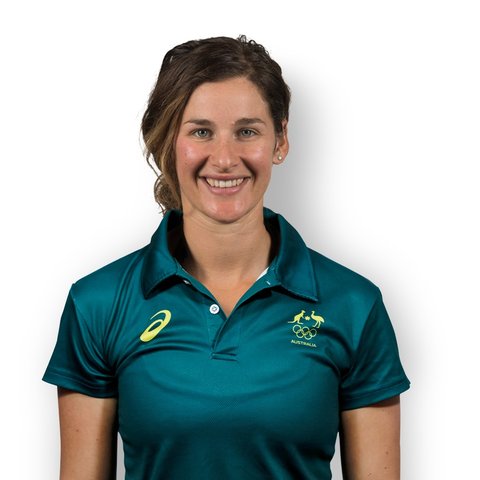
Photo: Mercantile Radio
The daughter of two Olympic medallists
It took her a while to hear it. “I actually early on put way too much pressure on myself for that because I was trying to kind of be the daughter of 2 Olympic medallists,” she said, “rather than … I think I was trying to develop too quickly and I put so much pressure on myself that I end up kind of getting performance anxiety and kind of revving my … wheels too quickly.”
Her parents had been saying something else all along. “They always were, you know, ironically saying that rowing is just part of you. It’s not your whole identity.” If you treat it like a sport, or like something you enjoy, you will get a lot out of it. “If you pour your whole identity and your sense of worth into it, … when those, like, wobbles happen, that’s when the wheels fall off.”
They tried to frame it as a choice. Embrace the challenges of a two-kilometre erg, rather than thinking of it as a punishment. And this, which she still calls really good life advice: “This will end at some point. Like how much can you learn while you’re doing this.”
It took her a long time, she said, to hear that advice and actually embed it.
Valentine’s Day, 2016
The wobble, when it came, was as hard as they had warned. She had been on the team in 2015. She had her eyes on Rio. She had not thought a day after it. Then the niggles, and a rib, got away from her. She has been honest about the background to that. “I used to have a lot of disordered eating and really didn’t look after my bones … when I was younger.”
A group of them from the Victorian Institute of Sport were renting a house together in Penrith. New South Wales state championships were in singles. She still had a broken rib, and she was told she could not come unless she did a two-kilometre test. She did a two-kilometre test on a broken rib. Then the email came, of who would be going on. “I think I was the only one that like, was not on the list from the email that came out.”
“I got cut from getting to trials and I was devastated.” She still remembers the date. “That was Valentine’s Day 2016.”
There was a conversation with the selectors afterwards, and she was “just so emotional.” For a while, she thought she was done with rowing.
Learning to love it without an outcome
A conversation with Brodie Buckland, who had become a bit of a mentor, helped her stand the moment up. He had also rowed for Australia after college in the United States. She remembers him telling her it was devastating, “but he’s like, this is as bad as it’s going to get.” And then: “You have to also remember that you have an amazing family. You have an education for one of the best universities in the world.”
She left, and she travelled. She went to South America, and she worked on a lemon farm in Chile, picking lemons, completely off grid. Meeting people who were doing that work for a dollar an hour, she said, gave her a lot of perspective. Then she came home and had to decide whether she wanted to do it again.
Nick Mitchell asked her a better question than whether she was ready to be an Olympian. He asked if she wanted to come down and do some club rowing, “and just kind of learn to love the sport without the high performance.” It was the first time she had “just rode for the sake of rowing.” She did a pair at Women’s Henley with Alex Hagen, and they won. “I just like learnt to love the sport without outcome.”
Only then did she go back to the VIS, begin to understand what her body actually needed, and find her way into the centre again, older, with a degree, and with a clearer sense of how to be in that environment.
“I have to kind of be on my own journey”
“Once I started to kind of level set and realise that I have to kind of be on my own journey, that’s when things kind of click into place.”
The most beautiful picture she gave me of that journey still includes her parents, but it is hers. After she was selected in the women’s four for Tokyo, her mum came to visit. Jess Morrison had a bad back, and for a session they did not have a three seat. Her mum said, “Well I’m here.” Rosie was in two, Sue was in three, and they went out for a loop, two generations of the same family in the same four. Lucy Stephan, sitting behind, told them they rowed in the exact same way.
“No one can have those shared experiences,” Rosie said. “The more that I’m kind of away from rowing, the more I feel so incredibly grateful to have had them on that journey.”
The four — Lucy Stephan, Rosie, Jess Morrison and Annabelle McIntyre — won Olympic gold in Tokyo. The medal is not the start of the story. The start is a girl being told to have her own identity, then losing the Games she thought she would go to, then learning to love the sport without an outcome, and only then getting back in the boat as herself.
What I take from Rosie
A lot of us, around Mercantile, know what it is to grow up close to a tradition, or close to a parent who already knows the sport. Rosie’s mum was right, and it is harder advice than it sounds. You can be proud of the people you come from, and still have to get on your own journey, or the pressure will do the rowing for you.
The other lesson is the one she had to learn the long way, on Valentine’s Day, in a house full of people who had made the list. A deselection can feel like the end of the identity. It turned out to be the moment that sent her to a lemon farm, then back to club rowing, then back to a four that would go to Tokyo. Love the sport without the outcome first. The rest, if it comes, can only come after that.
Listen to Episode 4: Beyond the DNA: Rosie Popa on Legacy, Identity and Olympic Gold
Spotify: https://open.spotify.com/episode/0QSXtZOfqudunj0XmL4Pns
Apple Podcasts: https://podcasts.apple.com/au/podcast/beyond-the-dna-rosie-popa-on-legacy-identity-and/id1855369498?i=1000738042586
Episode page: https://mercantileradio.au/2025/10/27/beyond-the-dna-rosie-popa-on-legacy-identity-and-olympic-gold-episode-4/


Leave a Reply